Addiction treatment programs New Jersey
New Jersey has 330 SAMHSA-listed addiction treatment programs. Of these, 46 offer detox and 283 provide outpatient care, per listings dated November 15, 2026. This page shows how to compare them.

The total of 330 is drawn from SAMHSA FindTreatment.gov listings dated November 15, 2026. Those same listings show 53 facilities offering residential treatment, 237 offering medication for opioid use disorder and 228 accepting Medicaid. Use the counts to narrow your search, then verify each program directly, because a listing records what a facility reports, not a rating or a measure of quality.
Start with the level of care before you compare addresses. Each level below is described by hours per week, where the person sleeps and who it tends to suit.

Questions worth asking about programs
Is the level of care matched to the person
Ask what assessment the program does before admission. A facility that offers several levels, from detox through outpatient, can move someone as needs change. One that offers a single level will refer elsewhere, and it helps to know that on the first call.
Which payments are accepted
Of the listed facilities, 261 accept private insurance and 228 accept Medicaid, which in New Jersey includes NJ FamilyCare. Ask whether state funding, sliding scales or a block grant can lower the cost. Confirm in writing before a first appointment rather than after.
Who operates and accredits it
Listings show 189 private for-profit, 130 private nonprofit and 11 public or government operators. Accreditation is separate: 107 facilities hold Joint Commission accreditation and 98 hold CARF. Ask which body accredited the program and check that body's own directory.
What the therapy actually involves
Ask the program which approaches it offers, such as cognitive behavioral therapy (CBT), dialectical behavior therapy (DBT), trauma-informed care and relapse prevention planning. Ask whether medication-assisted treatment (MAT) is available on site, and whether 12-step meetings or other peer support are part of the week.
Addiction treatment programs New Jersey
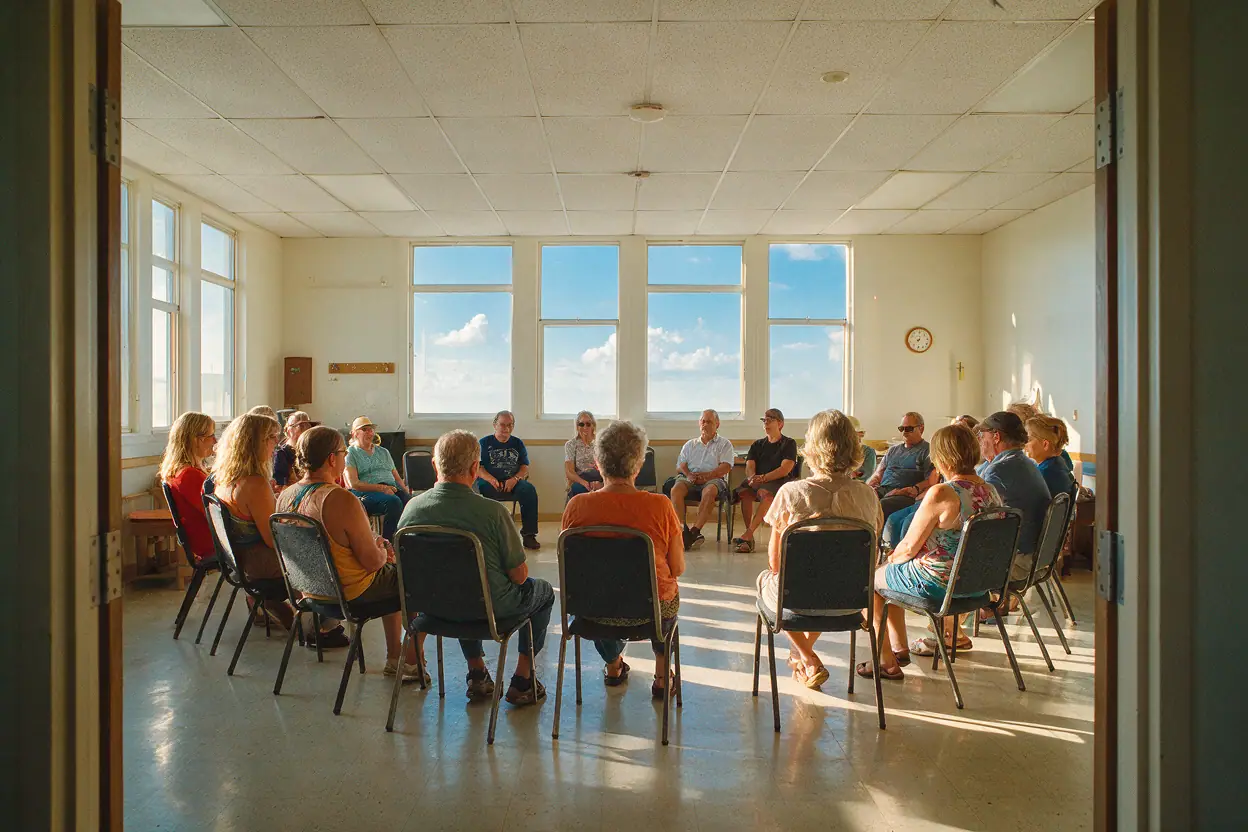
Medical detox is listed at 46 facilities in New Jersey. A clinician or the program can explain what detox involves. A clinician or the program can explain what detox involves. Outpatient rehab is the largest category, with 283 facilities, and includes intensive outpatient programs (IOP) and partial care: sessions several times a week while the person sleeps at home. A clinician or the program can explain whether outpatient care fits someone's work and family schedule. For people leaving residential care, sober living and aftercare keep the continuum of care going after discharge.
| Care level | Sites | Medicaid | Coverage |
|---|---|---|---|
| Medical detox | 46 | 33 | 37 |
| Residential treatment | 53 | 27 | 33 |
| Outpatient rehab | 283 | 204 | 231 |
| Medication for opioid use disorder | 237 | 168 | 203 |

NJ questions
How long is an average stay in addiction treatment programs New Jersey?
There is no single length that covers the 330 listed facilities, because each program sets its own schedule. A clinician at the program can explain how it decides when someone steps down a level and what aftercare follows discharge.
Does NJ FamilyCare or Medicaid cover rehab in New Jersey?
Medicaid in New Jersey, which includes NJ FamilyCare, is accepted at 228 of the 330 listed facilities, one of the largest payment categories. Under federal parity law (MHPAEA) and the ACA, most health plans must cover substance use disorder treatment on terms comparable to medical care; the plan decides what a specific stay costs. Ask the provider whether it is in network and whether prior authorization is required, and ask about state funding and block grant slots when a facility does not take your plan.
Who pays for inpatient rehab in New Jersey?
Payment splits across several sources. Of the listed facilities, 261 accept private insurance and 149 accept Medicare, while 125 accept TRICARE and 135 accept state insurance. Self-pay is accepted at 314, and 136 offer a sliding scale. If the cost looks out of reach, then ask about the 153 facilities accepting block grant funding and the 69 offering financial assistance before ruling a program out.
What are the most common drugs involved in New Jersey treatment admissions?
The listings this page relies on record which services each facility offers, not which substances people used, so they cannot rank drugs by admissions. For that picture, use state health department data. The listings do show that medication for opioid use disorder is offered at 237 facilities. SAMHSA notes the medications used for opioid use disorder are buprenorphine, methadone and naltrexone, and that methadone is provided through federally certified opioid treatment programs.
What are the levels of care for addiction treatment?
SAMHSA describes treatment settings as outpatient, intensive outpatient, partial hospitalization (day treatment), residential and hospital inpatient, and notes that detoxification can be offered in several of them. A clinician at the program can explain which level fits a particular assessment, and a counselor there can describe what a typical week looks like.